


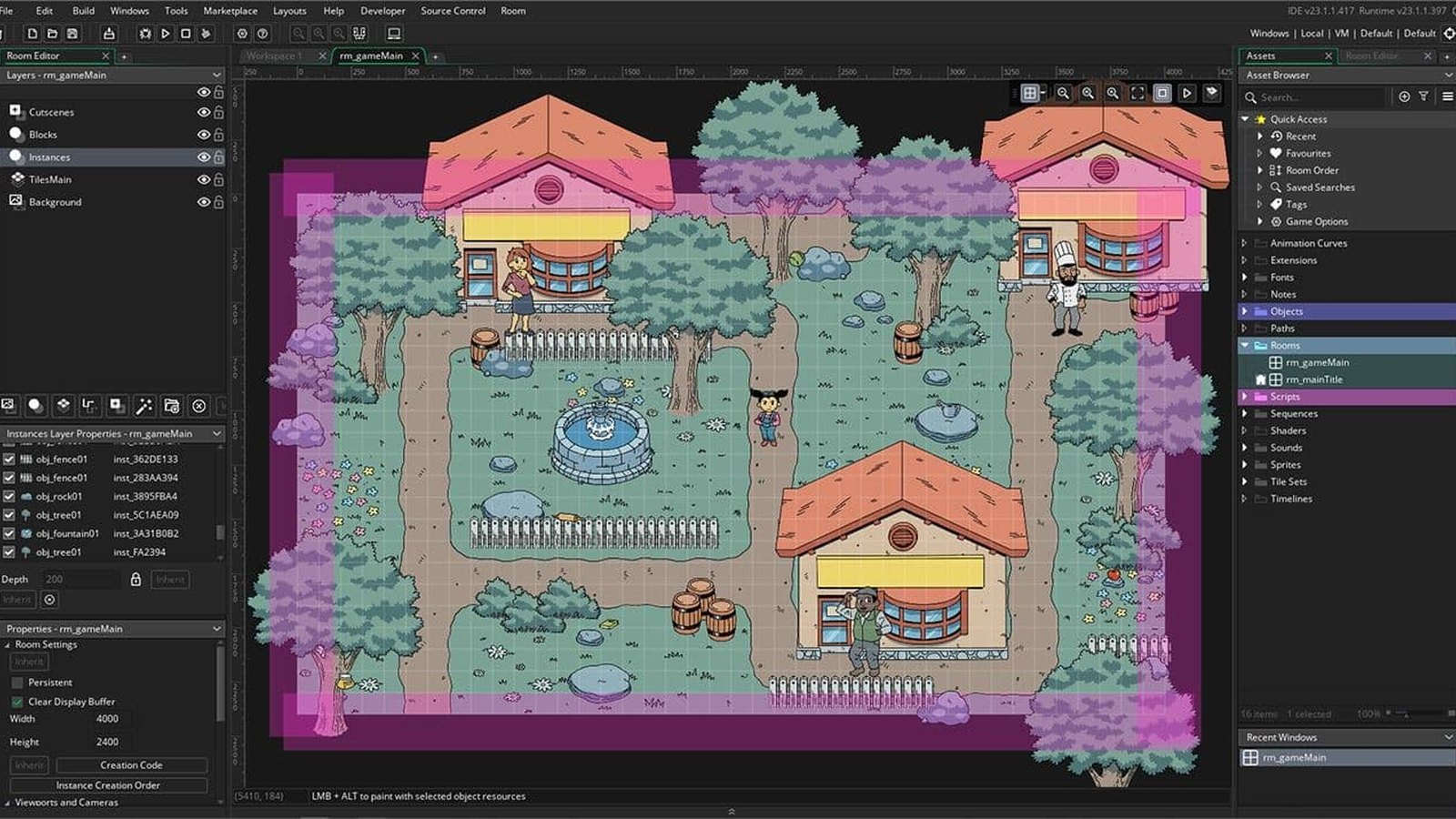
GameMaker has announced that its next-generation runtime, GMRT, will become free for commercial use starting January 1, 2027. The change will allow developers to create and commercially distribute games across desktop, mobile, web and GX Games without purchasing a Professional license.
The new licensing policy was confirmed in an official GameMaker announcement published on October 23, 2026. It represents a significant change for independent developers, particularly those planning to release commercial PC games using the engine.
Under the revised model, developers using GMRT will no longer need to purchase a commercial license to sell their games on supported non-console platforms. The company also confirmed that GMRT source code will be accessible across all licensing tiers, giving developers additional flexibility to examine and modify the technology behind their projects.
GameMaker has historically been used to develop popular independent games such as Undertale, Hotline Miami and Katana Zero, demonstrating its established role in PC and indie game development.
The commercial licensing change applies specifically to GMRT, rather than every version of GameMaker’s runtime.
Developers using the existing GameMaker Studio 2 (GMS2) runtime will still need a Professional license for commercial distribution outside the platforms already permitted under its free license. GameMaker confirmed that existing Professional license holders can continue selling GMS2-based games and will additionally receive access to the GMS2 runtime source code.
Console development also remains subject to separate restrictions. Developers seeking to export games to console platforms must hold an Enterprise license and be approved by the relevant platform holder, regardless of whether they use GMRT or GMS2.
GameMaker stated that the announcement does not change the prices of its existing licensing tiers. The distinction means developers working with the older runtime or targeting consoles will still need to consider the established paid licensing options.
The source-code announcement builds on plans outlined earlier in 2026, when GameMaker confirmed that developers would be able to access, modify and build from GMRT’s desktop, mobile and web source code. The company also outlined additional source-code access for eligible Enterprise developers working on console platforms.
GMRT is being developed as GameMaker’s next-generation runtime, with beta releases rolling out across supported platforms. It is intended to succeed the existing GMS2 runtime as the engine’s primary focus for new features and development.
Under GameMaker’s previously announced roadmap, GMS2 is becoming feature-complete, with future feature requests directed toward GMRT. The older runtime is expected to continue receiving SDK updates and critical bug fixes through at least the first quarter of 2028.
Russell Kay, Head of GameMaker, described the new licensing approach as part of the company’s effort to make game development more accessible while GMRT continues its beta rollout.
The January 2027 change removes the Professional licensing requirement for commercial games built with GMRT on supported non-console platforms. For independent developers considering GameMaker for future PC releases, the runtime they choose will therefore determine whether a paid commercial license is necessary.
